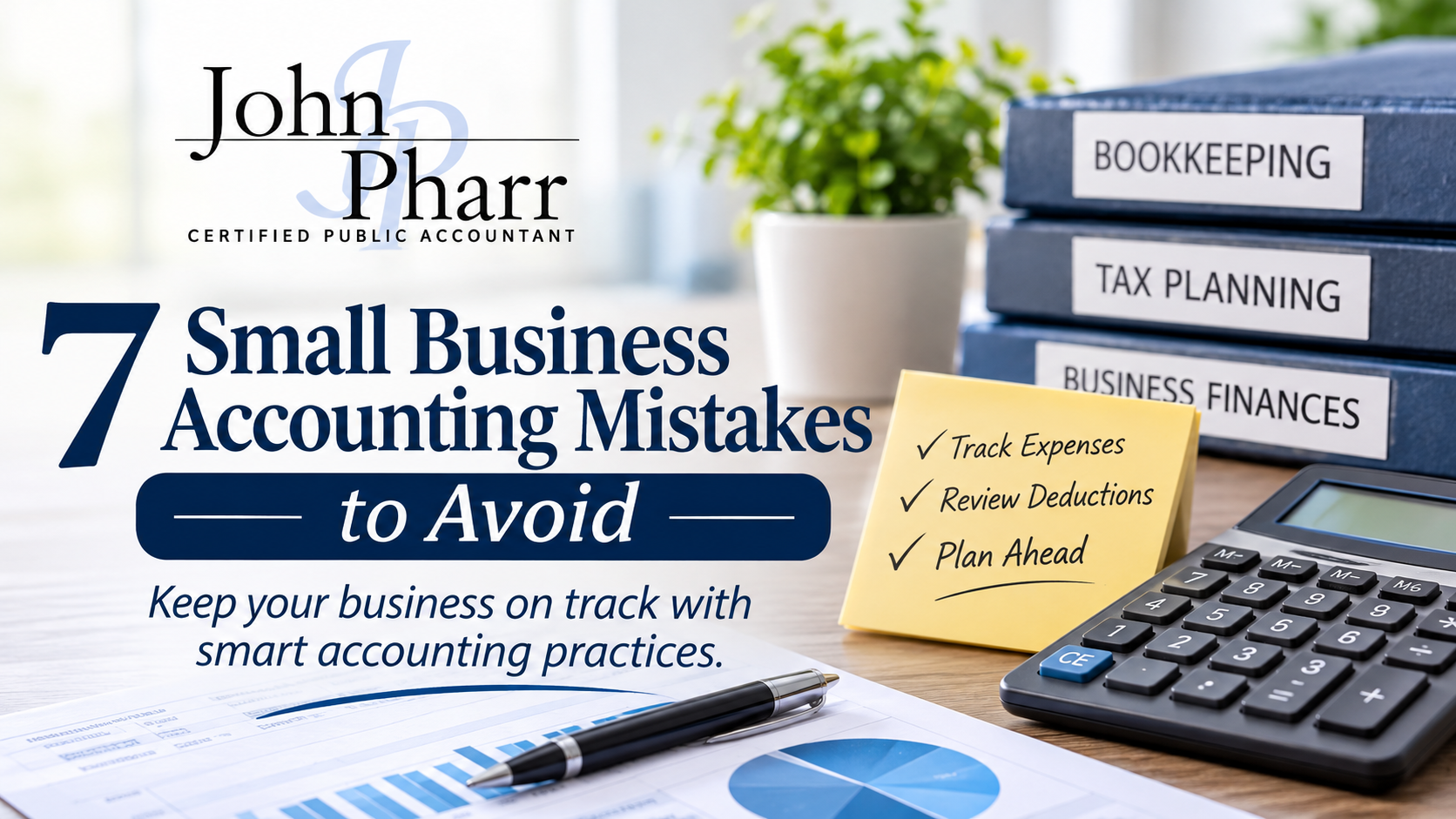
7 Common Accounting Mistakes Small Business Owners Make (And How to Avoid Them)
Running a small business takes time, dedication, and a lot of hard work. Between managing employees, serving customers, handling daily operations, and keeping everything running smoothly, it’s easy for accounting and bookkeeping to fall to the bottom of the priority list.
Unfortunately, small accounting mistakes can turn into bigger financial problems if they aren’t addressed.
Whether you’re just starting a business or have been operating for years, understanding common accounting mistakes can help you make better financial decisions, stay organized, and avoid unnecessary complications.
Here are seven mistakes small business owners should watch out for.
1. Mixing Personal and Business Expenses
One of the most common mistakes business owners make is using the same bank account or credit card for personal and business purchases.
While it may seem convenient, mixing expenses makes bookkeeping more complicated and can create problems when it’s time to prepare your tax return.
How to avoid it: Open a separate business checking account and use a dedicated business credit card. Keep personal and business transactions separate, and maintain clear documentation for business purchases.
2. Not Keeping Accurate Financial Records
Good bookkeeping is about more than simply tracking how much money comes in and goes out.
Business owners should maintain accurate records of income, expenses, invoices, receipts, payroll, and other financial transactions.
Without organized records, it can be difficult to understand how profitable your business really is or identify areas where you may be overspending.
How to avoid it: Set aside time each month to review your financial records. Consider using accounting software or working with a professional bookkeeper to keep everything organized.
3. Waiting Until Tax Season to Think About Taxes
Waiting until tax season to review your finances can leave you scrambling to find receipts, organize expenses, and understand your tax obligations.
Tax planning should be an ongoing process, not something that happens once a year.
How to avoid it: Review your financial statements regularly, monitor estimated tax payments, and communicate with your CPA throughout the year. Planning ahead gives you more opportunities to address potential issues before deadlines arrive.
4. Misunderstanding Business Tax Deductions
Many business owners either overlook legitimate deductions or assume that every purchase made through their business is automatically deductible.
The IRS has specific requirements for business expenses. Generally, expenses must be ordinary and necessary for carrying on a trade or business to qualify.
How to avoid it: Keep receipts, document the business purpose of expenses, and ask your tax professional before making assumptions about what qualifies as a deduction.
5. Not Understanding Cash Flow
A business can be profitable on paper and still struggle to pay its bills.
This happens because profit and cash flow are not the same thing. Outstanding customer invoices, loan payments, inventory purchases, and other obligations can affect how much cash is actually available.
How to avoid it: Monitor cash flow regularly, follow up on unpaid invoices, review upcoming expenses, and maintain a realistic operating budget.
Understanding where your money is going can help you make better business decisions.
6. Handling Payroll Incorrectly
Payroll involves more than simply paying employees. Employers may have responsibilities involving tax withholding, payroll tax deposits, reporting, and required filings.
Misclassifying employees as independent contractors or missing payroll deadlines can create costly problems.
How to avoid it: Maintain accurate payroll records, understand your employer responsibilities, and consider professional payroll assistance to help keep your business compliant.
7. Choosing a Business Structure Without Understanding the Tax Implications
Your business structure can affect how your income is taxed, how you report earnings, and what administrative responsibilities you have.
Sole proprietorships, partnerships, LLCs, S corporations, and C corporations all have different tax and legal considerations.
A business structure that works well for one owner may not be the best choice for another.
How to avoid it: Before choosing or changing your business structure, discuss your financial situation and goals with qualified tax and legal professionals.
Your Accounting Practices Can Make a Difference
Managing a successful business involves more than generating revenue. Understanding your financial records, staying current on tax responsibilities, and making informed financial decisions are all important parts of long-term success.
Avoiding these common accounting mistakes can help reduce unnecessary stress and put your business in a better position for the future.
You don’t have to manage every financial detail on your own.
Need help keeping your business finances organized?
Our office works with individuals and business owners to help navigate accounting, bookkeeping, and tax-related needs.
Contact our office today to learn how we can help you stay organized, understand your financial picture, and make informed decisions for your business.
https://www.pharrcpa.com/pharr-cpa-articles/
Disclaimer: This article is intended for general informational purposes only and should not be considered individualized tax, legal, or financial advice. Tax rules and business requirements vary depending on your circumstances. Consult a qualified professional regarding your specific situation.


About Post Author